




We recently bought our two youngest kids a phone.
It has a receiver, a curly cord, and a real dial tone. It rings in our house, stays plugged into the wall, has voicemail, and is primarily used for one increasingly unusual purpose: talking to another person.
It is called a Tin Can, a screen-free home phone created for kids who are ready to call their friends but are not necessarily ready to carry a cell phone. Or whose parents are not ready for them to carry a cell phone.
For our family, it’s the perfect middle step.
My husband and I have not decided exactly when our younger children will get cell phones. We do not have a magical age circled on the calendar or a firm rule that will apply perfectly to every child.
We simply know that we are not ready right now.
At the same time, our kids are growing up. They want to talk to their friends, call their grandparents, and make plans without relying on us to arrange every interaction. They’re ready for a little more independence, even if they’re not ready for everything that comes with a smartphone.
The Tin Can gives them that independence without placing the entire internet in their pockets.
A Phone That Is Just a Phone
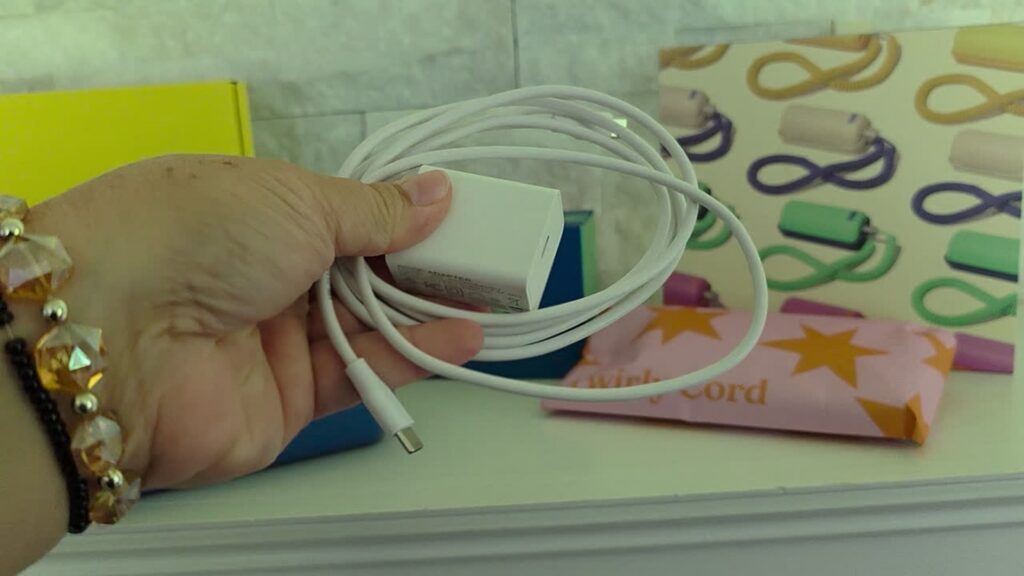
The Tin Can looks and behaves much like the landline phones many parents grew up using, but it connects through home Wi-Fi instead of requiring a traditional phone jack.
There are no apps, games, text messages, social media feeds, or an internet browser. Kids pick up the receiver, listen for the dial tone, and call someone. That is it.
From the parent companion app, we can decide which contacts are allowed to communicate with the phone. Numbers that have not been approved cannot reach our children, which means they are not answering calls from strangers, scammers, or random robocalls.
Parents can also create Quiet Hours, which prevent incoming and outgoing calls during times such as bedtime, homework, or family dinner. Emergency calling can still be enabled through the parent app, including during Quiet Hours.
The phone is not cordless, and I see that as a benefit rather than a limitation. It stays in its designated place instead of migrating to the dinner table, the car, a bedroom, or anywhere else our children happen to go.
When a phone call ends, they hang up and walk away.
There is no temptation to check one more notification, watch one more video, or scroll through one more feed. The device has finished doing its job.
Our Friends Made It Even Better
One of the biggest reasons the Tin Can has worked so well for us is that a large group of our friends feels the same way.
We’re not the only parents who are unsure when the right time for a cell phone will be. We know many families whose children want to talk to one another, but whose parents are not ready to introduce smartphones, texting, or social media.
Several of our friends purchased Tin Cans, creating a small network of kids who can call each other directly.
Tin Can-to-Tin Can calls are included without a monthly subscription. Families who want their children to call approved regular cell phones and landlines can choose the company’s Party Line Plan, currently listed at $9.99 per month.
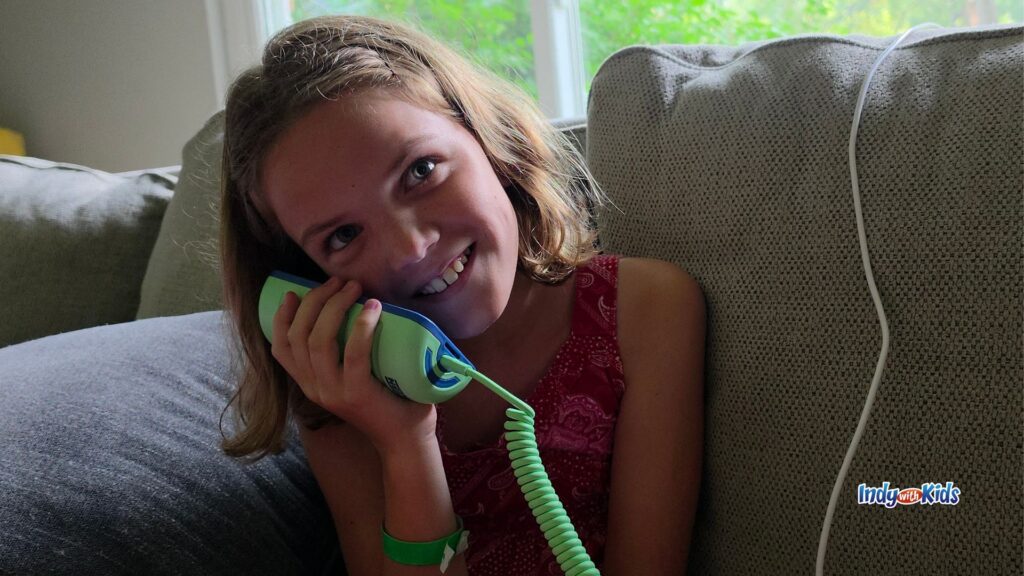
Now our kids can call a friend and ask, “Do you want to come over?” You wouldn’t believe the glee and happiness that comes from my kids when they make that call.
They can figure out whose house everyone is meeting at, discuss the elaborate rules of a game they invented, or spend 20 minutes talking about something that could probably have been explained in 30 seconds.

In other words, they are using the phone exactly the way kids are supposed to use a phone.
My kids are also practicing skills that children don’t always develop through texting. They have to introduce themselves, ask whether their friend is available, listen without watching someone’s facial expressions, and figure out when it is time to end the conversation.
They’re learning phone manners, conversation skills, and confidence.
More importantly, they love it.
They love hearing the phone ring. They love dialing the numbers themselves. They love having a way to reach their friends that does not require borrowing a parent’s phone.
The Phone Line I Begged for at 11
Watching my kids use the Tin Can has made me think about how important the telephone felt when I was growing up.
When I was about 11 years old, I begged my parents to let me get my own phone line.
I even offered to pay for it myself.
The idea came directly from *The Baby-Sitters Club* books. The girls had their own phone line for their babysitting business, and I was convinced that having my own number was the first essential step toward becoming a successful teenage entrepreneur.
I wanted to start a business; I wanted people to be able to call me; I wanted a phone number that belonged to me and represented something I was building.
Looking back, I love that my first dream of owning a phone was connected to independence, responsibility, and starting a business.
As I moved through my teenage years, the phone became one of the primary places where friendships grew.
I spent hours talking to my girlfriends. We discussed school, clothes, friendships, crushes, our plans for the weekend, and problems that felt enormous at the time. Sometimes we talked about everything, and sometimes we talked about absolutely nothing.
Later, there were nights when I fell asleep while talking on the phone with boys. The conversation would grow quieter and quieter until one of us stopped answering.
Those phone calls were an important part of growing up, too. They gave us space to connect, process our lives, and learn how to maintain relationships.
There was no audience, no screenshots, likes, or public comments. The conversation existed between two people, and when we hung up, it was over.
Connection Without Constant Access
I’m not trying to recreate my childhood perfectly for our kids; I’m not over here trying to figure out how to give my kids a 90’s childhood. Their world is different, and technology will be part of their lives.
My husband and I are also not saying that cell phones are bad or that our children will never have them; in fact, we did things differently with our first two children. Eventually, J & Q will probably need mobile phones for school, activities, transportation, and communication.
We’re simply saying they do not need all of that yet.
Right now, they need a way to connect with the people they love. They need opportunities to make their own plans, strengthen their friendships and practice a little independence.
The Tin Can gives them those experiences without asking them to manage apps, messages, notifications and endless digital access.
As a parent, I love knowing exactly whom they can call and who can call them. I love that I can set boundaries around when the phone is available. I love that it remains in our home rather than becoming another device they carry everywhere.
What I love most is hearing their side of a conversation from the next room.
I hear them laugh, make plans, and occasionally struggle through an awkward pause. I hear them learning how to be friends without a screen helping them.
Our children will have plenty of time for smartphones.
For now, I am happy to let them stretch out beside the phone, twist the cord around their fingers, and talk to their friends just like I did.
Order Your Own Tin Can Phone Landline
Use my referral code or referral link when you order your Tin Can to receive $5 off your purchase. I’ll also receive a discount on my monthly plan, so it’s a simple way to save on your order while supporting our family too. Here’s my Tin Can Discount code: FRIEND-FL2JFK8
