




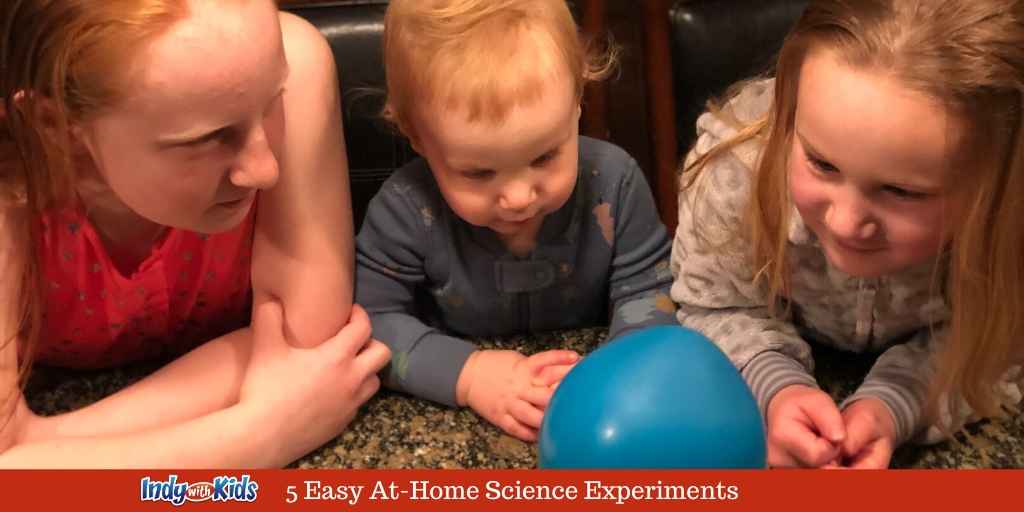
The kids have finished their elearning, played on iPads, gone outside, now are looking at you for something to do…turn to science! Here are 5 experiments you can do with all ages using ingredients already in your home.
Why Should You Wash Your Hands?
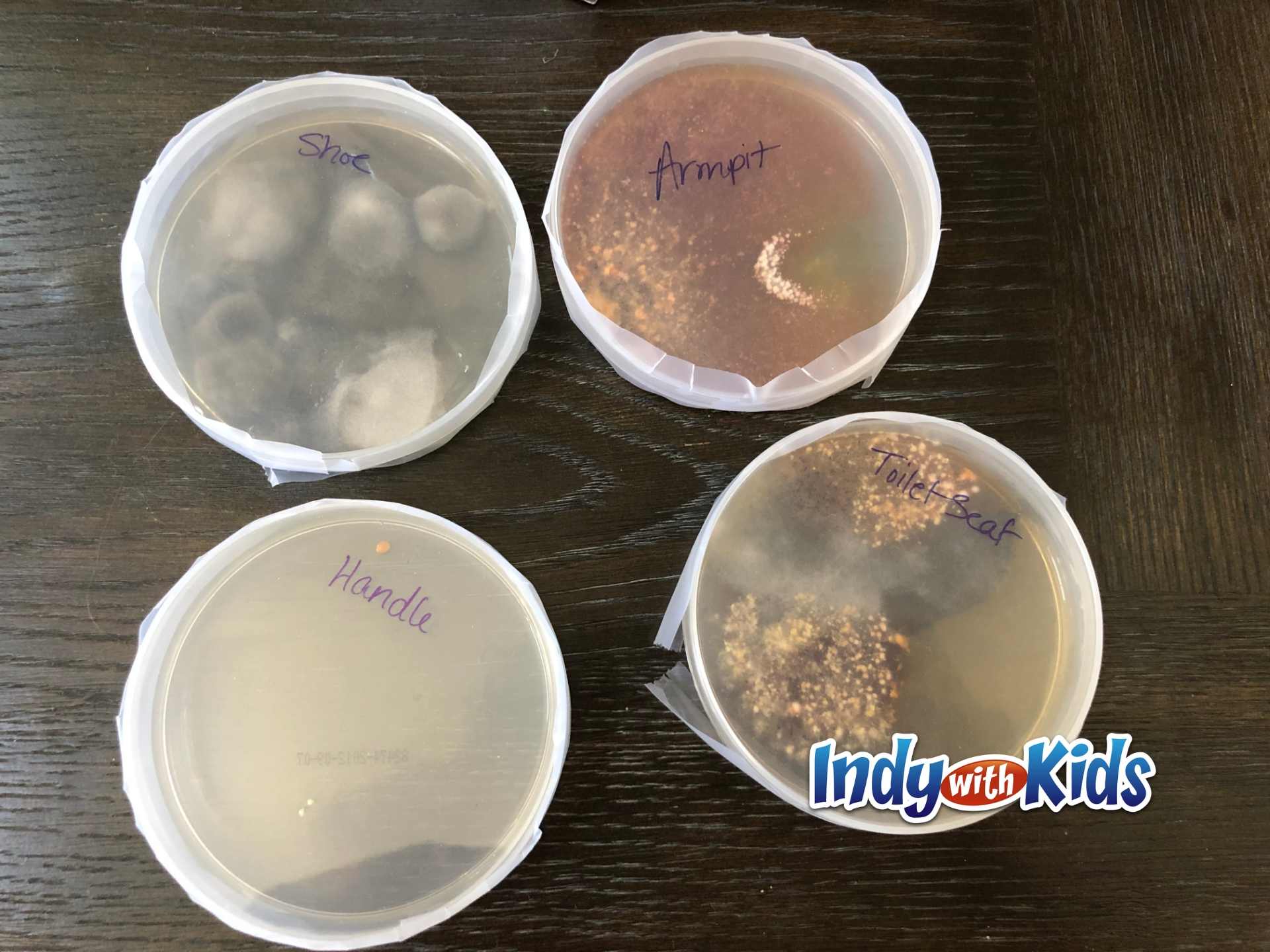 We’ve done this experiment in our home with a science kit that included agar and petri dishes, but you can also just use a loaf of bread and some ziplock baggies!
Take one slice of bread out of the loaf and immediately put it in a baggie. This will be the control used to compare. Take another slice out and have one of your kids rub their hands all over it (before washing) and put it in a baggie. Another slice can be rubbed by hands washed with soap and then sealed in a baggie. Another slice can be rubbed by hands cleaned with hand sanitizer. Check bags every day and have the kids draw their observations.
Variations: My kids loved seeing how much bacteria and fungi grew from things around the house, so they tested the bottoms of their shoes, the toilet seat, and the sink handles. Be creative!
Science Connection: Have your kids investigate microorganisms and the differences between them.
Rainbow Liquids
This experiment is perfect for St. Patrick’s Day!
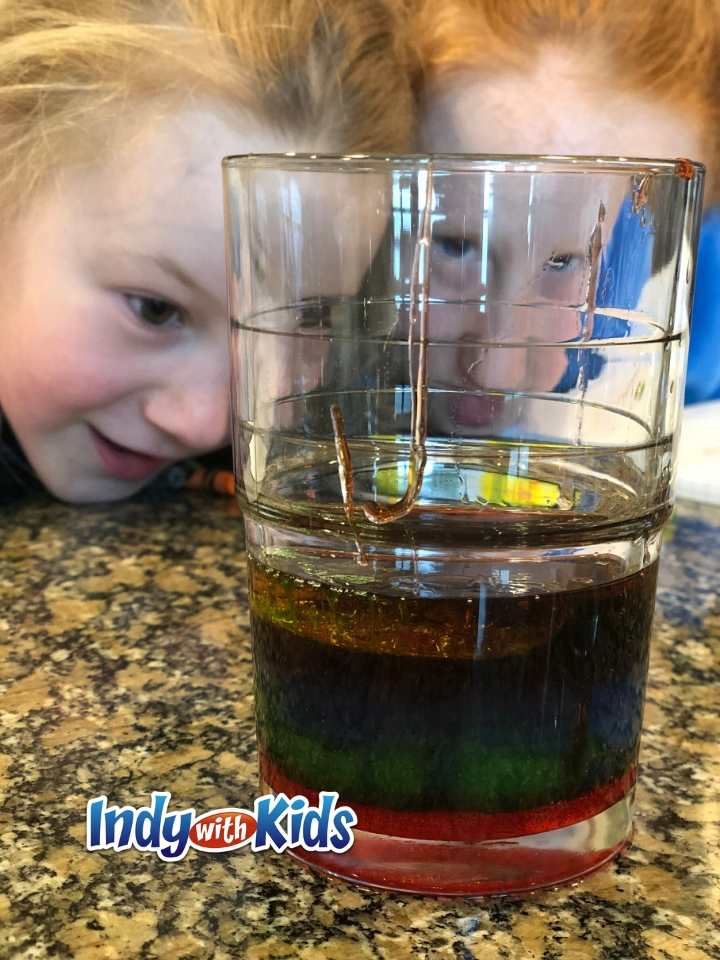 Gather a clear, tall jar or glass, food coloring, and the following liquids: honey, corn syrup, dish soap, water, vegetable or olive oil, and rubbing alcohol. Slowly pour a layer of honey into the jar, being sure to only pour in the middle and not touch the sides. Then, you may want to add a little food coloring to the corn syrup and slowly pour a layer into the jar, not touching the sides. Color your dish soap next, then slowly pour it in, not touching the sides. The next layers are a little tricker because you need to pour them super slow and let them pour down the side, so possibly use a baster, straw, or pipette. Color some water and add a layer slowly down the side of your jar. Finally, color your oil and slowly add it down the side of the jar followed by the rubbing alcohol.
Variations: Gather some small objects, such as a paper clip, penny, chocolate chip, or a push pin. Drop them in the jar and see where they stop.
Science Connection: Have your kids investigate density. Older kids could even investigate the exact density number of each of the liquids.
Does Sunscreen Work?
 Do your kids often run from you when it’s time for sunscreen? Show them its importance with this simple experiment!
All you need are some dark pieces of construction paper and sunscreen. Fold the paper in half. Label one side “sunscreen” and the other side “
no sunscreen.” Put a thin layer of sunscreen on your child’s palms (spray might be best) and have them make a handprint on the “sunscreen” side. Put the paper out in the sun and check it in an hour, then in another hour. Have the kids record their observations.
Variations: Use different sunscreens or different SPFs to test if one seems to protect better than another. Keep them out for a few days or longer to see what happens over time.
Science Connection: Have your kids research UVA and UVB and what makes sunscreen work. Why do they need to reapply?
Inflate a Balloon with a Chemical Reaction
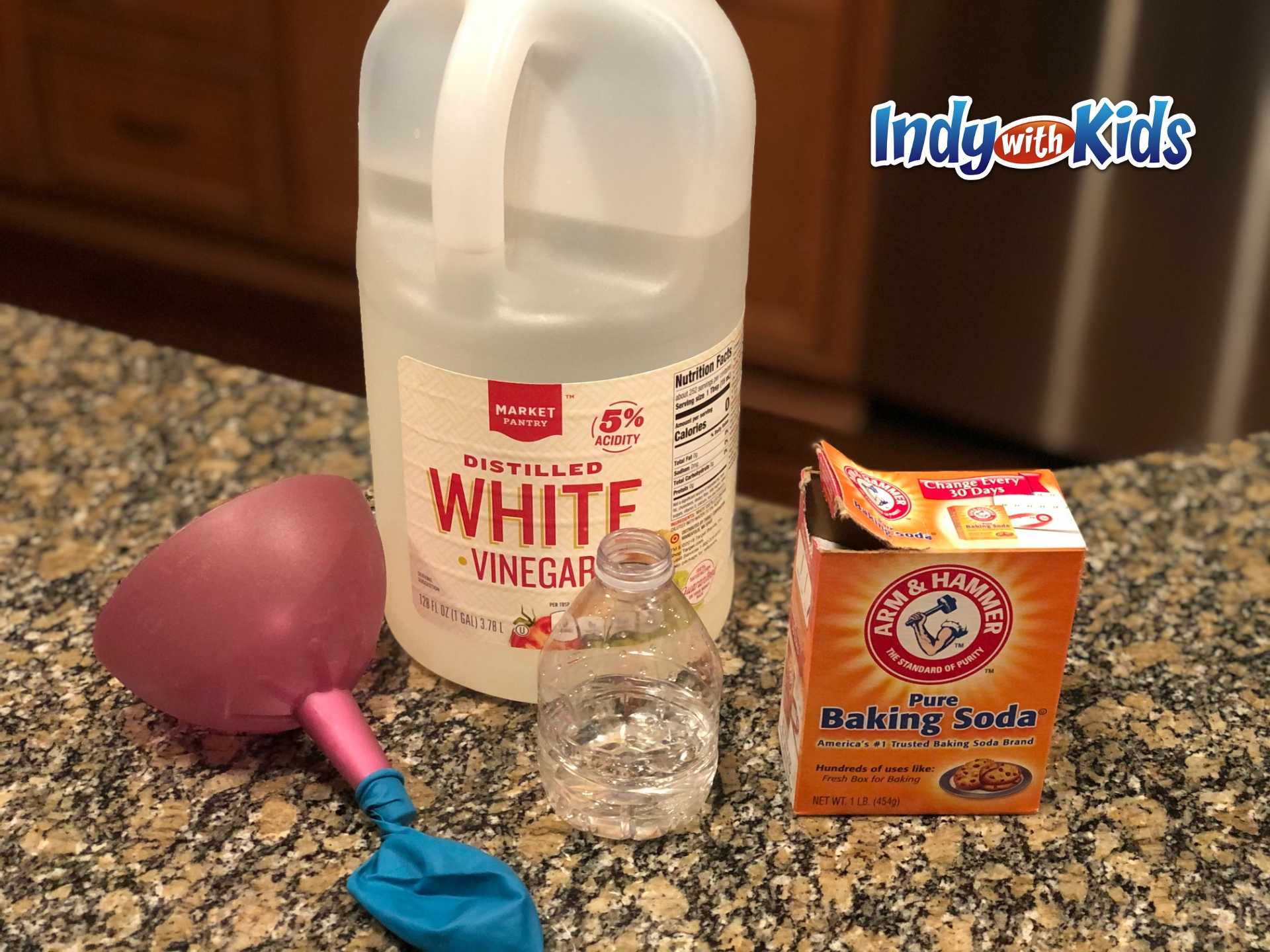 Baking soda and vinegar are the ingredients for the classic volcano eruption experiment. In this twist, though, you’ll use the ingredients to blow up a balloon.
Simply add vinegar to the bottom of an empty water bottle until it’s about ⅓ full (using a funnel makes the process much easier!). Put 2-3 tablespoons of baking soda into a balloon. Attach the balloon to the water bottle without letting the baking soda drop into the vinegar. When ready, lift the balloon and watch what happens.
Variations: Try different amounts of vinegar and baking soda to see if your balloon inflates more or less.
Science Connection: Have your kids research the chemical reaction of baking soda and vinegar. What gas is filling the balloon to make it inflate (not helium!)?
Balloon Rocket
Gather a long piece of string, a straw, tape, and a balloon. Put the straw on the string and tie the string between two surfaces, such as a chair and doorknob. The longer the string, the better! Blow up the balloon but don’t tie it. Keep the balloon horizontal to the floor and attach it to the straw using tape. When ready, move the straw all the way to one end of the string, then release the balloon.
Variations: Make a balloon rocket for each kid and have races! Does the size of the balloon make a difference? Can you attach boxes or other objects to the straw and get them from one end of the string to the other?
Science Connection: Have your kids investigate Newton’s Third Law—for every action, there is an equal and opposite reaction.

1 thought on “Five Easy At-Home Science Experiments Your Kids will Love <i class="fas fa-heart"></i>”
Pingback: Best Things to Do in Indianapolis During the Big Game Besides Watch Football