



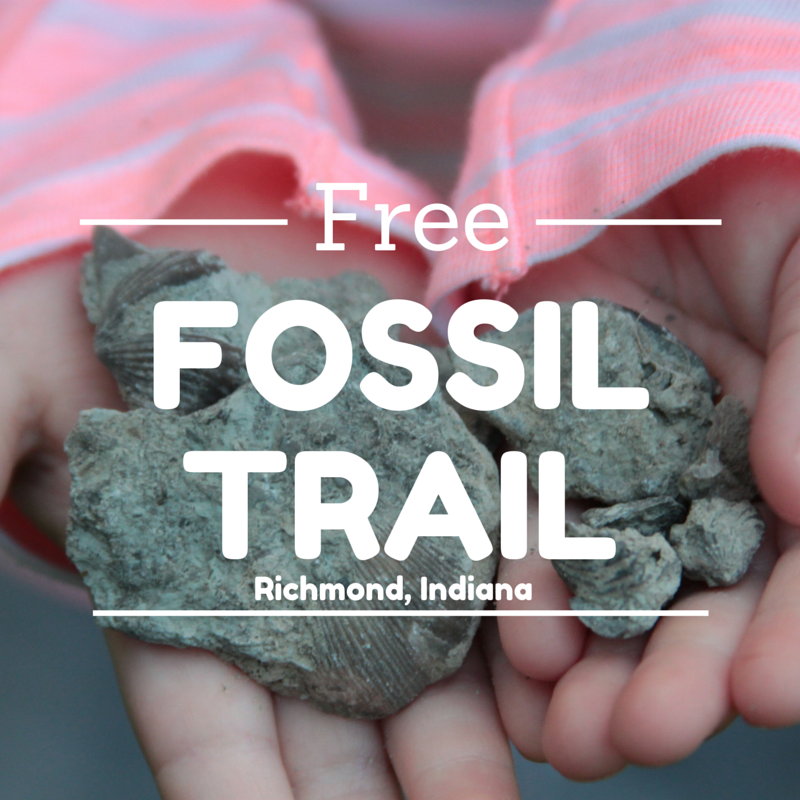
Some family adventures sound like the beginning of a movie: grab a map, head into a rocky creek bed, search for ancient treasure, and come home with proof that you found something 445 million years old.
The Whitewater Valley Fossil Hunt in Richmond, Indiana, is exactly that kind of adventure.
This free, family-friendly passport program sends families out to explore fossil-rich areas around Richmond and the Whitewater Valley, where kids can look for actual fossils left behind from a time when Indiana was covered by a warm, shallow sea. Not dinosaurs. Not woolly mammoths. We are talking about sea creatures that lived here hundreds of millions of years before either of those animals existed.
I’ve taken my kids fossil hunting in this area, and it is one of those activities that checks every box for me: outdoors, educational without feeling like school, inexpensive, memorable, and just unusual enough that kids feel like they are doing something really cool.
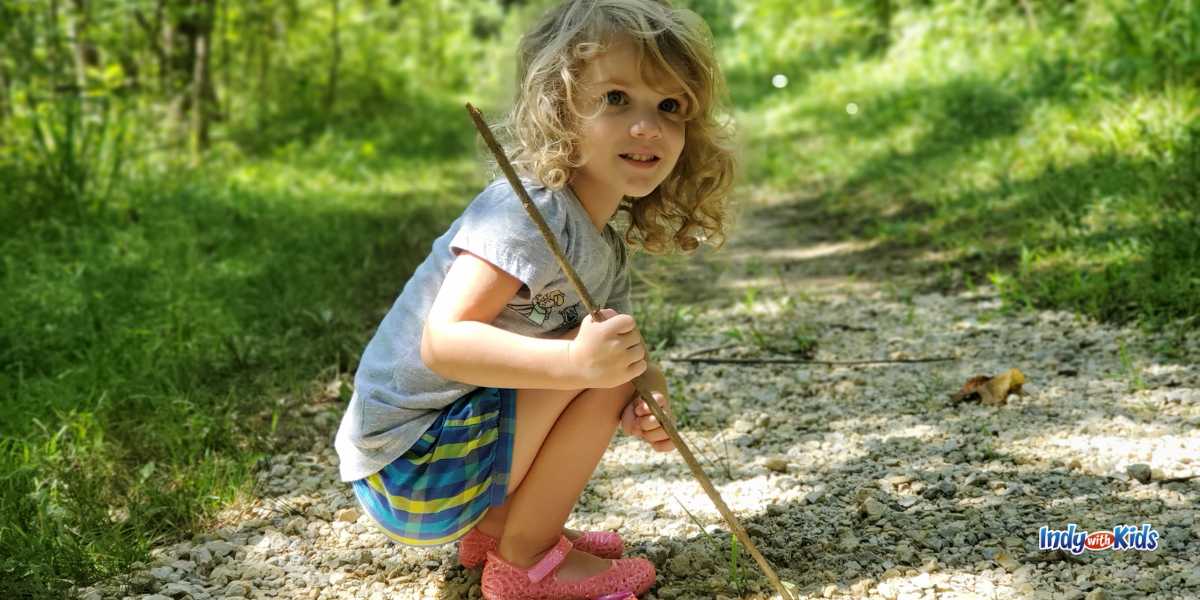
What Is the Whitewater Valley Fossil Hunt?
The Whitewater Valley Fossil Hunt is a self-guided fossil hunting adventure created through a partnership between the Wayne County Convention & Tourism Bureau, the Earlham College Geology Department, and local volunteers.
Families begin by picking up a Fossil Trail Passport at the Old National Road Welcome Center in Richmond, or by downloading a printable copy before their trip. Then, you head out to fossil hunting locations in the Whitewater Valley and search for at least five fossils.
Once you have completed your hunt, bring your passport and fossils back to the Old National Road Welcome Center to receive an embroidered fossil patch.
Yes, your kids get to collect ancient fossils and earn a patch. This reward system turns a casual walk outside into a full-blown family mission.
The program is free, which makes it an easy day trip from Indianapolis or a great addition to a weekend in Richmond. All you really need are sturdy shoes, comfortable clothes, water, your passport, and a container or bag for carrying home your fossil finds.
Indiana Used to Look Very Different
One of the coolest parts of this experience is realizing just how much history is beneath your feet.
Approximately 445 million years ago, during the late Ordovician period, Indiana looked nothing like it does today. The land that would eventually become Indiana was located south of the equator and covered by a shallow sea. Instead of cornfields, highways, and playgrounds, this area was filled with marine life.
The fossils kids find during the Whitewater Valley Fossil Hunt are pieces of that ancient underwater world.
I love activities that make kids pause and think, “Wait, this happened right here?” Fossil hunting does that beautifully. You are not standing behind museum glass, looking at something discovered far away. Your child is picking up a rock in Indiana and realizing that the imprint inside it came from a creature that lived here before dinosaurs ever appeared.
That is a pretty incredible way to spend a day.
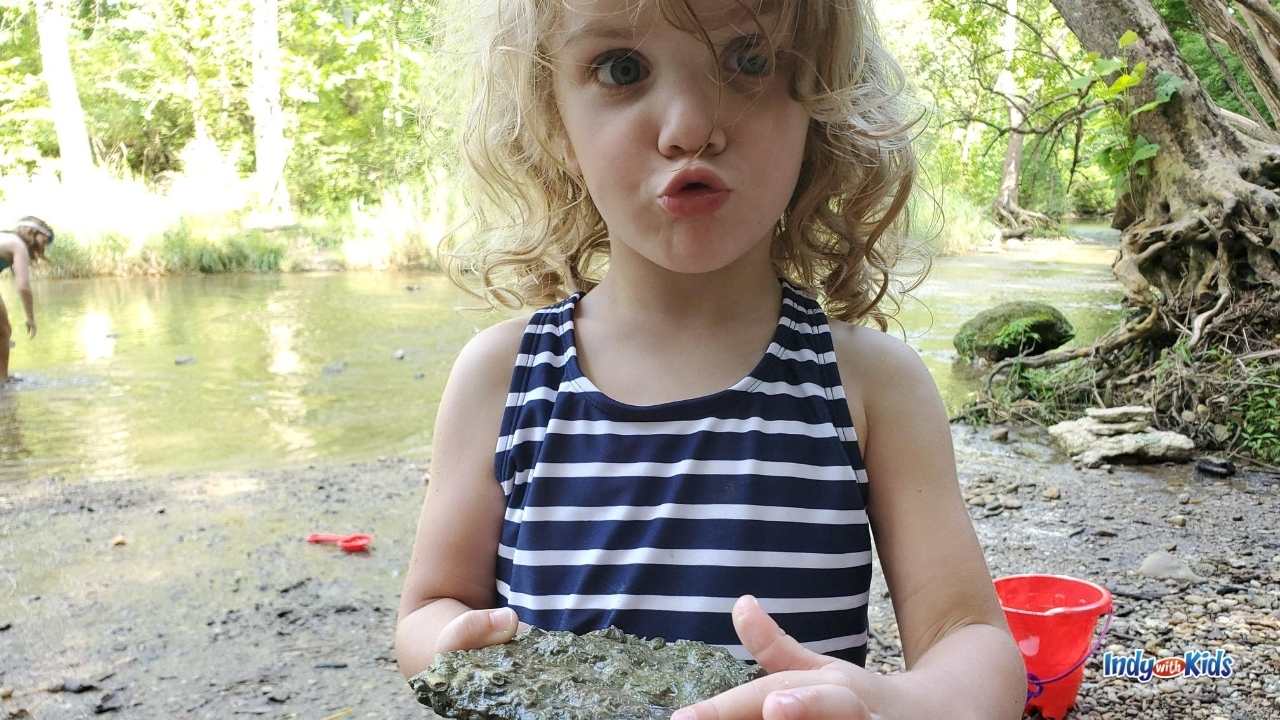
What Kinds of Fossils Can Kids Find?
Families are encouraged to find at least five fossils, and the passport gives kids space to identify different types of fossils they discover.
Some of the fossils commonly found in the Whitewater Valley include:
Brachiopods: These look a little like ridged seashells. They had two hinged shells and lived attached to the sea floor, filtering food from the water.
Bryozoa: These may look like tiny twigs, branches, or delicate net-like patterns on a rock. They were colonies made up of many tiny animals.
Crinoids: Sometimes called sea lilies, crinoids were related to modern starfish and sea urchins. Kids may find small circular stem pieces that almost look like tiny beads or buttons.
Corals: Look for horn-shaped fossils or colonial corals with visible patterns.
Gastropods: These are ancient snails, often preserved as impressions or filled-in shapes rather than full shells.
Bivalves: These include ancient clams, scallops, and oyster-like animals. Kids may find impressions of their shells in the rock.
Cephalopods: These were squid-like animals that lived inside cone-shaped shells.
Trilobites: These extinct, bug-like sea creatures are especially exciting, although families are more likely to find fossil pieces than a complete trilobite.
This is where the hunt gets really fun. At first, kids may think they are just looking at rocks. Then someone finds a shell pattern. Someone else notices ridges. Suddenly, every rock is being examined as if it could be the most important scientific discovery of the day.
When your kid is proudly holding a fossil that has been waiting millions of years to be found, it kind of feels like it is.
Where to Find Fossils in the Whitewater Valley
Fossils can be found throughout the Whitewater Valley, especially where water, weather, and erosion have loosened them from surrounding rock. The official Fossil Hunt Passport recommends looking along stream banks, trails, and loose rubble piles.
Here are several places families can begin their fossil hunt.
Richmond Fossil Park
Location: Bridge Avenue, just west of Sim Hodgin Parkway in Richmond
Richmond Fossil Park is a natural starting point for families because it includes a rubble pile where kids can look through loose rocks for fossils. Families may also find fossils along the near shore of the creek.
Across the creek, you can see an exposed section of the Whitewater Formation, the limestone layer that contains many fossils from Indiana’s ancient shallow sea.
For kids who are new to fossil hunting, this is a great place to slow down, start examining rocks, and begin figuring out what they are looking for.
Whitewater River Valley Gorge Trail and Thistlethwaite Falls
Location: Between Test Road and Waterfall Road in Richmond
The Whitewater River Valley Gorge Trail is another exciting fossil hunting location, especially for families who enjoy mixing their treasure hunt with a scenic outdoor adventure.
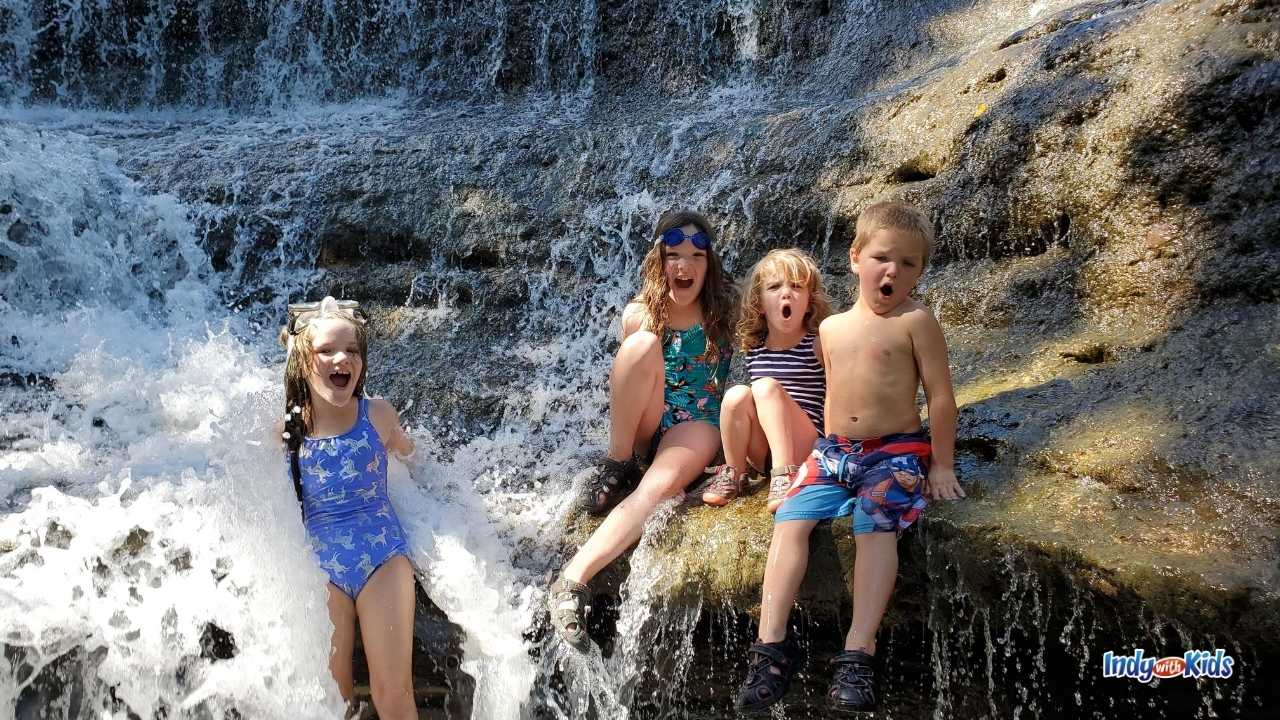
Families can look for loose fossils along the trail or near the stream bank at the base of Thistlethwaite Falls. On a warm day, the waterfall setting makes the outing feel even more adventurous. Kids get to explore, search for rocks, and be near the water, which is basically a perfect summer combination.
Be prepared for wet feet, slippery rocks, and kids who want to stay longer than you planned.
Fairfield Causeway Road Near Brookville Lake
Location: Just west of Brookville Lake in Brookville, Indiana
Families looking to extend their fossil adventure can also visit Fairfield Causeway Road near Brookville Lake. Rock formations in this area include the Waynesville and Liberty Formations, which are also known for fossils.
The passport recommends parking near the lake and walking up the hill while watching carefully for traffic. This location requires extra caution with children, and families should never climb on rock outcrops.
Why Kids Love Fossil Hunting
Fossil hunting is the perfect combination of nature walk, scavenger hunt, treasure hunt, and science experiment.
Kids love that they are allowed to search. They love that there is no one correct path to follow. They love that the smallest rock might be the best find of the day. And they especially love when adults get excited about their discoveries.
When I take my kids on adventures like this, I am always reminded that children do not need elaborate entertainment every minute of the day. Give them a creek, a rocky trail, a mission, and the possibility of finding prehistoric treasure, and suddenly they are completely invested.
There is also something special about finding an object that feels important. A fossil is not just another rock to toss into a pocket. It has a story. It belonged to a living creature in a version of Indiana that none of us could possibly recognize today.
The passport helps make the experience even more exciting because kids have a goal. They are not just casually collecting rocks. They are searching for five fossil specimens, trying to identify them, and working toward their embroidered patch.
That little patch becomes proof that they explored Indiana’s prehistoric past and came home as official fossil hunters.
What to Bring on Your Fossil Hunting Adventure
You do not need much equipment for this outing, but a little preparation will make the experience much more enjoyable.
Wear sturdy shoes that can handle rocks, mud, uneven terrain, and possibly water. Bring sunscreen, bug spray, bottled water, and clothes that can get dirty. A small bucket, reusable bag, or plastic container is helpful for holding fossil finds.
The official passport asks families to collect from loose rubble piles only and never attempt to break fossils out of intact rock in a hillside. Families should also watch for slippery slopes, poison ivy, falling rocks, insects, and traffic near roadside locations.
This is not the day for brand-new white sneakers or children who are expecting to remain spotless. This is a real outdoor adventure. Let them get muddy. Let them examine rocks. Let them fill your car with tiny geological treasures that you will probably still be finding under the seats six months from now.
Plan Your Whitewater Valley Fossil Hunt
To get started, pick up your Fossil Trail Passport at the Old National Road Welcome Center, located at 5701 National Road East in Richmond, Indiana, or download a copy before your trip.
Visit fossil-rich locations around the Whitewater Valley, collect at least five fossils, and return to the Welcome Center with your fossils and passport to claim your embroidered Fossil Patch.
The Whitewater Valley Fossil Hunt is one of those Indiana adventures that feels wonderfully unexpected. It is free, hands-on, outdoors, and memorable. Your kids get to be explorers, collectors, and paleontologists for the day, and you get a family outing that feels like much more than another afternoon away from home.
Because when your kids can hold 445 million years of Indiana history in the palm of their hands, that is not just a day trip.
That is a very good day.
